

Defrosting Salmon: Controlled Thawing for Quality

Defrosting is a critical control point and has a greater impact on texture and moisture retention than freezing itself. Improper thawing is the main cause of purge, soft texture, and reduced shelf life in frozen salmon.
The preferred professional method is slow defrosting under refrigeration at 0–4 °C. Salmon should remain sealed during thawing to prevent oxidation and dehydration. Depending on thickness, full thawing generally takes twelve to twenty-four hours and produces minimal moisture loss.
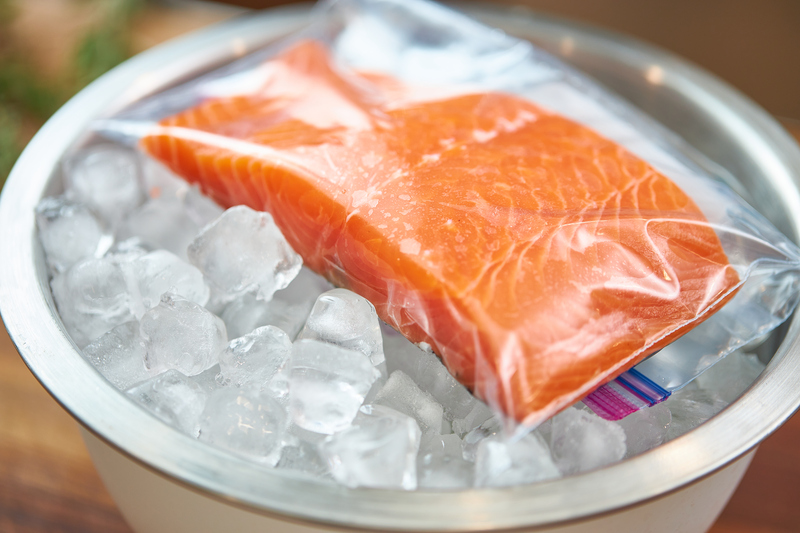
When time constraints apply, sealed salmon may be thawed under cold running water, provided the water temperature remains below 21 °C and the fish is cooked immediately after thawing. This method is operationally acceptable but inferior to refrigerated thawing for quality preservation.
Thawing salmon at room temperature or in warm water is unsafe and unacceptable. Once thawed, salmon must be kept refrigerated and used within twenty-four to forty-eight hours. Raw salmon should not be refrozen unless it has been fully cooked.



Get in Touch
Explore our full Salmon range and discover our personalized customer service.