

Freezing Salmon: Standard Professional Procedure
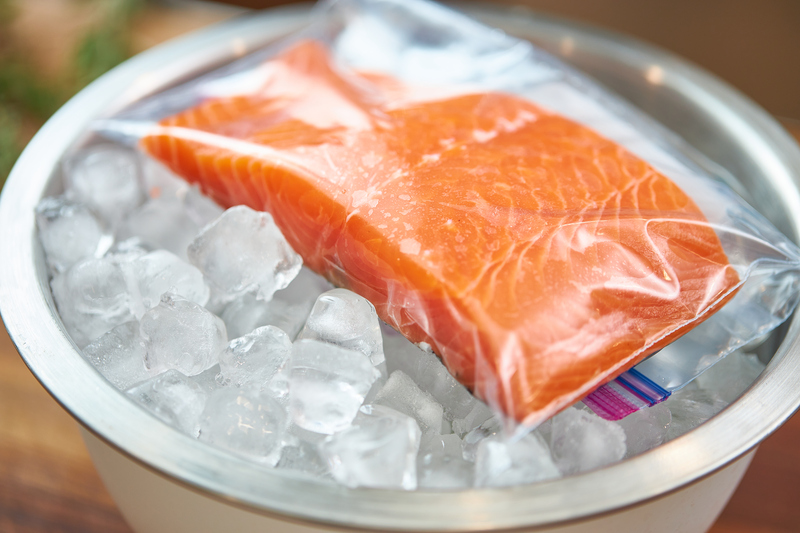
Freezing salmon is used in professional kitchens to preserve quality, ensure parasite control, and stabilize supply. Freezing does not improve salmon; it preserves the condition of the fish at the time of freezing. Only salmon of high freshness, kept close to 0 °C and handled hygienically, should be frozen.
For salmon intended for raw, lightly cured, or cold-smoked use, freezing is required to destroy parasites. Recognized standards confirm that freezing at −20 °C for a minimum of seven days, or at −35 °C for validated shorter holding times, is effective for parasite destruction.
Salmon should be portioned before freezing to reduce handling after thawing. Oxygen exposure must be minimized, as salmon fat oxidizes rapidly. Vacuum sealing is the preferred method, while tightly wrapped moisture- and vapor-proof packaging is an acceptable alternative. Rapid freezing is essential, as fast freezing limits ice crystal size and preserves muscle structure.
Frozen salmon must be stored at a stable temperature of −18 °C or lower. Temperature fluctuations reduce quality even if the fish remains frozen. For fatty salmon, optimal eating quality is maintained for approximately two to three months. Longer storage remains safe but results in gradual flavor and texture degradation.




Get in Touch
Explore our full Salmon range and discover our personalized customer service.